Information checked: 13 October 2026.
Combine checks before driving, weekly tyre and accessible fluid checks, and a record of scheduled workshop jobs. Adapt this Mercedes maintenance checklist to your handbook and powertrain. It helps you recognise changes early; repairs beneath the car and high-voltage work require appropriately equipped technicians.
Before driving: look, listen and check visibility
Walk around for an obviously flat tyre, fresh damage or an unexpected puddle. Clear the windows and mirrors, check lights and make sure braking feels normal before entering traffic. GOV.UK roadworthiness advice makes clear that an MOT certificate is not a continuing guarantee of safety.
Look for loose wiper rubber, dirty number plates and luggage blocking your view. Ensure each passenger can use the seat belt and that nothing is trapped in a buckle. Keep suitable screenwash available rather than discovering an empty bottle on a dirty road.
Weekly: measure pressures and inspect tyres
The Highway Code advises checking pressures weekly while tyres are cold. Use the Mercedes setting for your tyres and load, not the maximum pressure on the sidewall. Front and rear requirements can differ.
Check the inner shoulder as well as the easily visible outside edge. Use a tread gauge and look for cuts or bulges. Ordinary passenger-car tyres need at least 1.6 mm across the central three-quarters of the tread and around the circumference.
Tyre defects occurred in 6.55% of initial tests. ( DVSA, April–June 2026; Great Britain Class 3 and 4 tests, all makes.)
Check fluids with the correct vehicle procedure
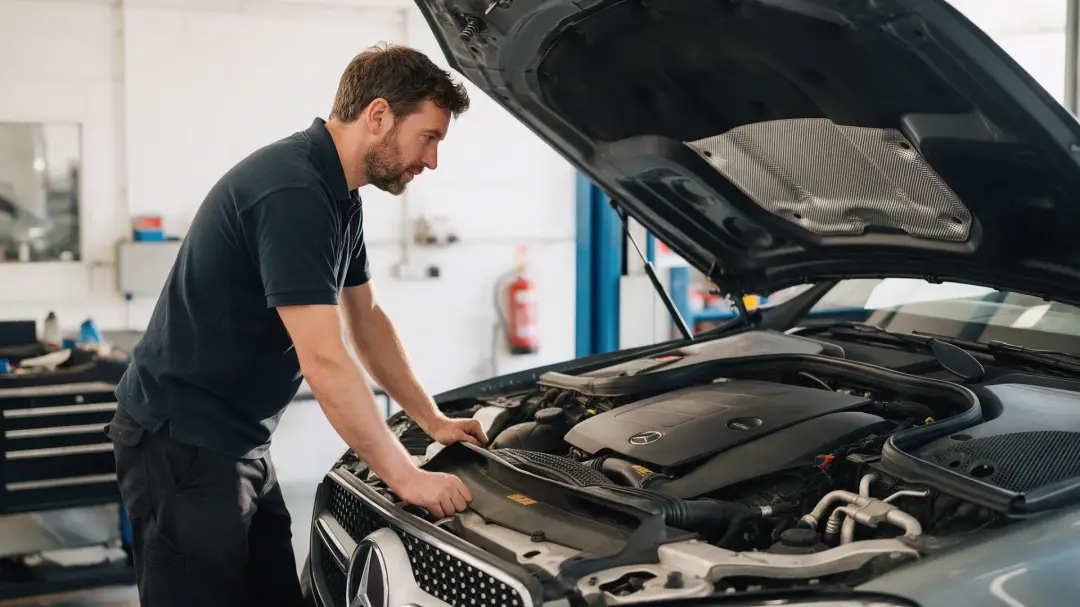
For petrol and diesel models, use the handbook method for the dipstick or electronic oil-level check, including its conditions for temperature and waiting time. Select oil with the required Mercedes approval, not just a familiar viscosity. Overfilling is not extra protection.
Inspect coolant only when safe and cool; never open a hot pressurised system. Repeated loss needs investigation. A low brake-fluid warning requires assessment of the brakes rather than an unexplained top-up. Battery electric cars have no engine oil but retain applicable cooling and braking maintenance.
Monthly: record small changes
Review any starting difficulty, repeated messages or new noises. Look for water entering the cabin or boot and check accessible seals. Clear leaves from accessible areas only as the handbook permits; avoid poking tools into unfamiliar drainage passages.
Use a phone note to record the date, mileage and observation. A series of measurements can reveal recurring pressure loss or a falling fluid level more clearly than memory. Share that record if a fault appears intermittently.
Before winter or a long journey
Check pressures for passengers and luggage, the available puncture equipment and any sealant expiry date. Keep the locking wheel key accessible for repairs. Confirm roadside assistance arrangements and arrange a battery assessment if starting has worsened.
For electric and plug-in hybrid models, inspect the charging cable externally and follow manufacturer cleaning instructions. Leave damaged equipment unused. Do not open traction-battery covers or attempt work on orange high-voltage cables.
Keep service and advisory records together
List the last service mileage and date, the next deadline and additional scheduled items. Confirm which filters, fluids and transmission work apply to your exact vehicle. Tick off jobs from an itemised invoice rather than memory.
Track MOT advisories separately with a note of whether each was repaired or monitored. The checklist then becomes a practical ownership record without inventing a universal replacement interval for parts whose wear must be measured.
A record format that stays useful
Make one line per observation with five fields: date, odometer, component, finding and action. For a tyre, record the measured pressure when cold and the setting required for that load. For an oil-level check, record whether you followed the correct procedure and whether any addition was needed. Avoid storing a measurement without its context; a hot pressure reading cannot be compared fairly with a cold one.
Use separate headings for checks you performed and work the garage completed. Attach the invoice number or digital report to the latter. That way an observation such as tyre wear checked is not mistaken later for a tyre replacement. Keep a space for the next required action so unresolved findings do not disappear among old notes. A simple spreadsheet is sufficient; the value comes from consistent observations, not a complicated application.
Adjust the checklist for the way you use the car
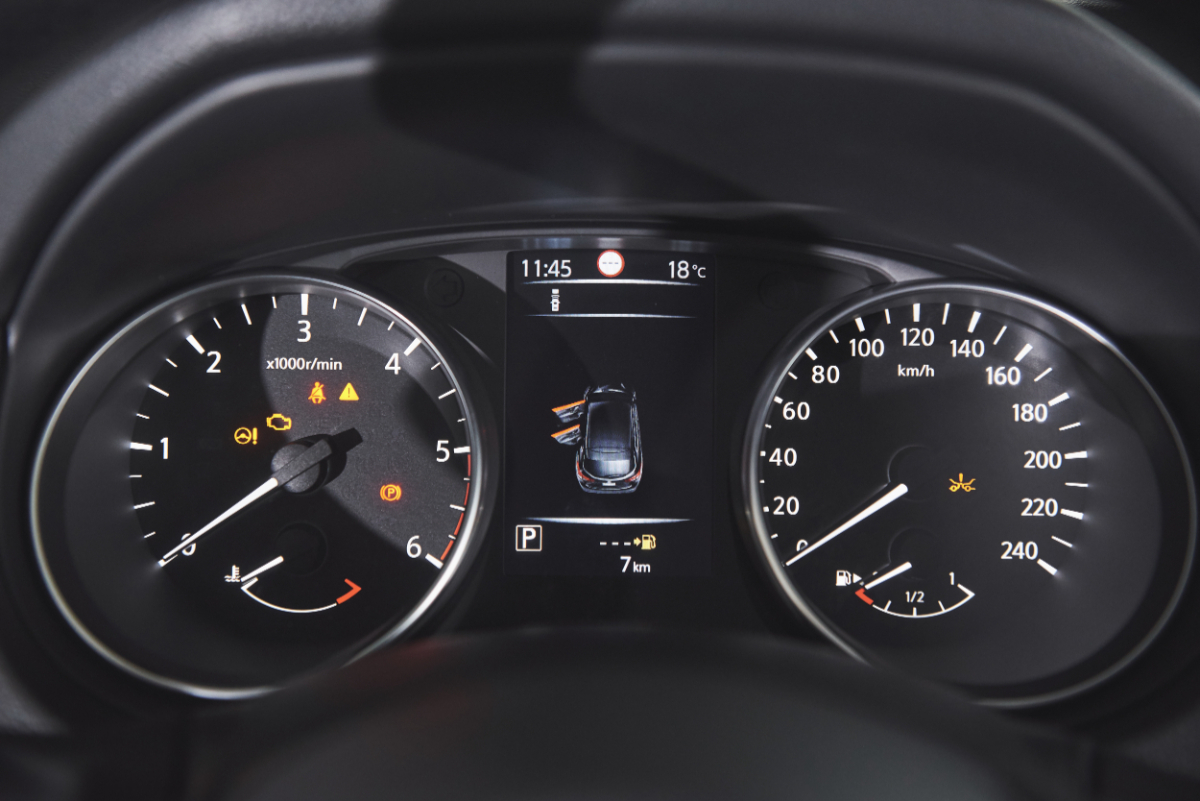
A Mercedes parked for extended periods has different ownership concerns from one used daily. Before returning a stored car to regular use, look for tyre damage, leakage, battery difficulties and warning messages. Follow the handbook for storage and recommissioning. Starting the engine briefly now and then is not a substitute for an appropriate maintenance or battery-care plan.
If you regularly carry heavier loads, check the specified pressures for that situation before departure. If most journeys are short, tell the service technician rather than applying a guessed shortened interval yourself. For occasional towing, establish the maintenance and operating guidance for the specific vehicle and equipment. Your checklist should prompt these questions without inventing requirements shared by every Mercedes.
Know which checks to leave to the workshop
Owner maintenance should be limited to tasks you can perform safely and correctly from the handbook. Do not go underneath an unsupported vehicle, loosen brake components or remove covers to reach high-voltage equipment. When a check requires a tool or method you do not understand, record the concern and arrange inspection. That is a useful completed action, not a failed attempt at maintenance.
Repeated fluid loss, recurring warnings and persistent uneven tyre wear belong on the workshop list even if a top-up or reset temporarily changes the display. Ask for the underlying cause to be assessed. Before approving a repair, request an explanation of the finding and whether it is urgent. Update the checklist afterwards with what was actually repaired so that the same concern can be recognised quickly if it returns.
Sources and further reading
Summary
Pressures, fluid trends and accurate records help a technician understand your Mercedes. Keep this checklist with your service paperwork, then use the servicing page to confirm the workshop jobs your particular vehicle needs from Godstone Mercedes Ltd in Godstone.